
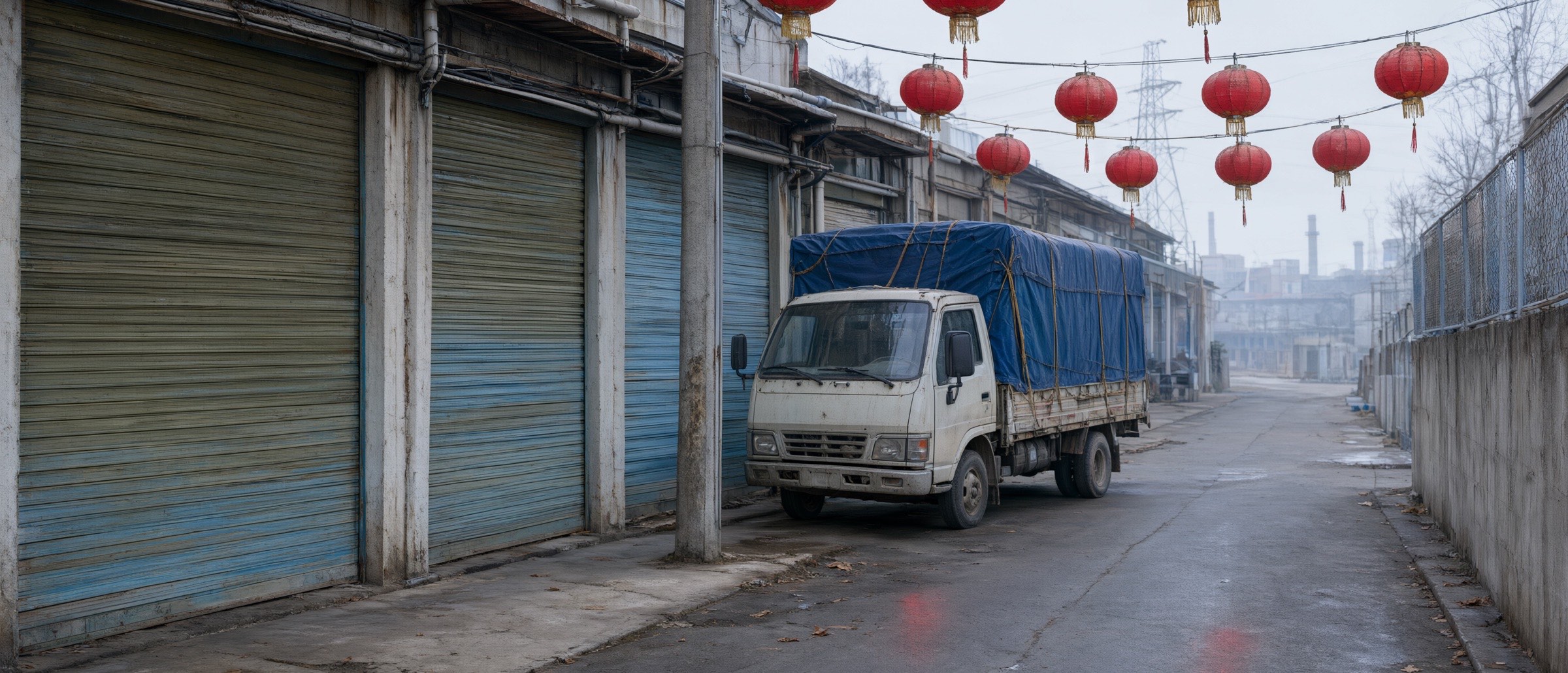
Lunar New Year 2027 falls on Saturday, February 6. The official public holiday is about a week long. But if you plan around the official week, you'll be short on parts in March.
In practice, the holiday shuts down most of Chinese manufacturing for three to five weeks. Workers leave early to beat the travel rush, and many don't come back for a while after it, some not at all. Factories that restart on the official date are often running at half capacity for another two or three weeks.
Here's how the season usually unfolds, and what we'd do in each window.
The calendar
| When | What's happening | What to do |
|---|---|---|
| Now – Oct 31 | Normal production. Peak season for Q4 retail is winding down. | Confirm Q1 forecasts. Place POs for anything you need in-plant before mid-March. |
| Nov 1 – Nov 30 | Factories fill their pre-holiday production slots. | Get written cargo-ready dates from suppliers. Anything not scheduled by now is at risk. |
| Dec 1 – Dec 20 | Carriers announce blank sailings and pre-holiday surcharges. | Book January space now. Contract clients: confirm your allocation with your planner. |
| Dec 21 – Jan 15 | The last reliable window. Rates climb week by week. | Aim for cargo-ready dates in this window. It's the last time you can plan without much drama. |
| Jan 16 – Jan 29 | Pre-holiday rush. Rollovers are common and trucking gets scarce. | Expect some cargo to roll a week. Consider air for anything critical. |
| Jan 30 – Feb 5 | Workers leave. Most factories stop production. | Don't count on anything being produced or picked up this week. |
| Feb 6 – Feb 14 | Lunar New Year. Official holiday. | Our China offices keep a skeleton crew for emergencies. |
| Feb 15 – Mar 7 | Slow restart. Labor shortages, quality slips. | Increase inspections. Expect partial shipments. Don't plan launches on this production. |
| Mar 8 onward | Mostly back to normal. | Resume normal booking lead times. |
Dates are our planning estimates based on past years. Individual factories vary, especially in their restart dates.
Three mistakes we see every year
1. Planning to the official holiday dates
The official holiday is about a week. The real disruption is closer to a month. If your supplier tells you they'll ship on February 16, ask them how many of their line workers they expect back by then.
2. Booking freight after the goods are ready
In January, cargo that's ready without a booking can sit for two weeks. Book when you place the PO, then adjust. Cancelling a booking costs less than missing a sailing.
3. Treating the first post-holiday run like any other
New and returning workers, rushed restarts and backlogged orders make February production the most error-prone of the year. We double our inspection sampling on post-holiday runs, and we'd suggest you hold off on anything launch-critical until March.
What we're doing for clients
- Protected space: contract clients have their weekly allocation guaranteed through January 29.
- Pre-holiday buffer stock: we have space in our Chicago and Toronto warehouses for clients who want to bring in 3–6 weeks of extra parts before the shutdown.
- Supplier check-ins: our origin teams will call every active supplier in November and again in the second week of February to confirm realistic dates.
- A shared calendar: every client gets a shipment plan that shows, PO by PO, which ones are at risk and what the fallback is.