
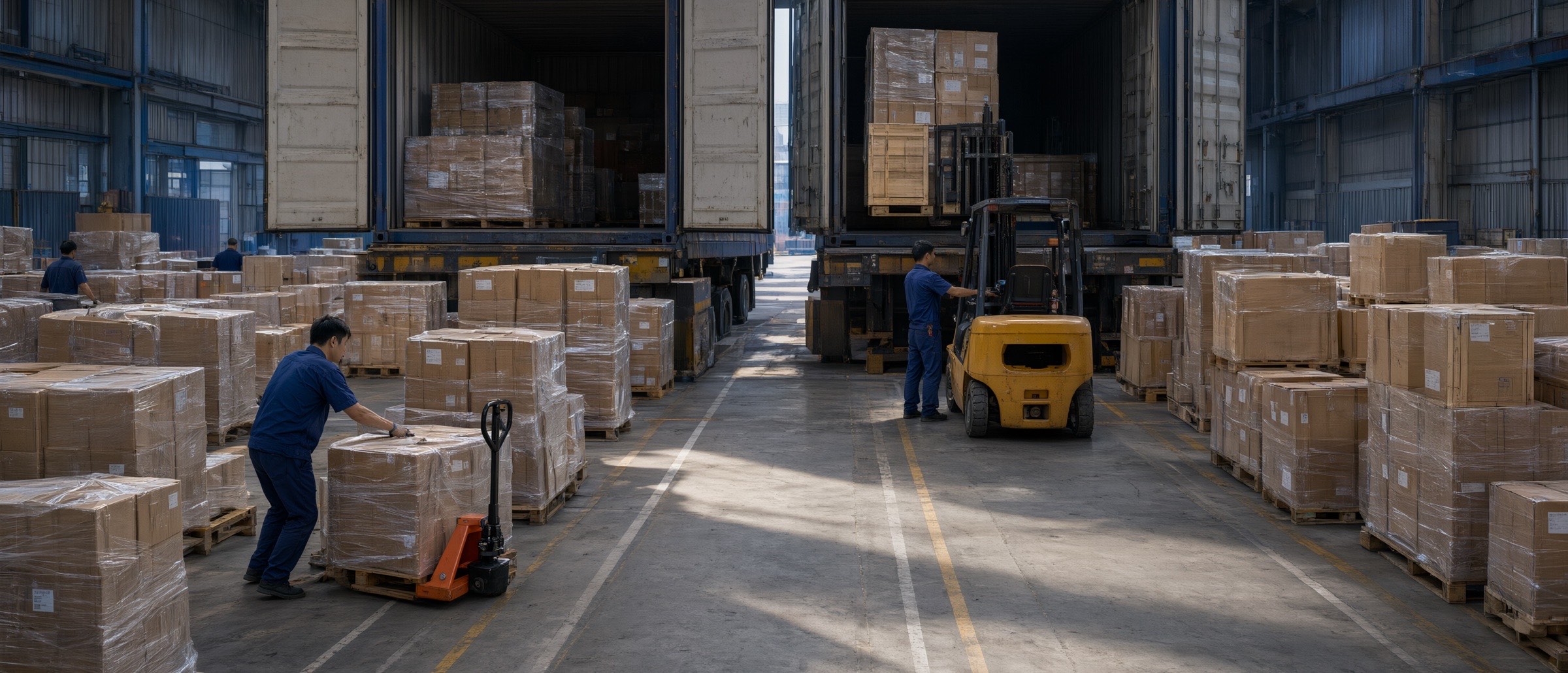
Clients ask us what "consolidation" actually looks like. It's not glamorous. It's a big, humid building a few kilometers from Yantian port, painted floor lanes, a lot of scanners, and people who are very good at counting. Here's one Tuesday in June.
6:30 am: trucks start arriving
The first supplier truck arrives before the shift starts. By 10 am, eight more have come in. Today's freight is for four containers: two for a smart home client, one for an appliance maker, one for a security hardware company. The suppliers don't know or care about each other. Our job is to make it look like they shipped together all along.

9:00 am: counting, measuring, photographing
Every pallet is checked against the purchase order: carton count, marks, labels and condition. We measure a sample of cartons from each supplier, because suppliers' declared carton dimensions are wrong more often than you'd think, and a load plan built on wrong dimensions doesn't fit in the container.
Today, one supplier is 20 cartons short on a PO of 480. Wen, who runs receiving, photographs the pallet, flags it in the system, and the client's planner in Chicago sees it before they've woken up. By the time they have, our Shenzhen team has already called the supplier: the 20 cartons will be ready Thursday, in time for next week's container.
1:00 pm: building the load plan
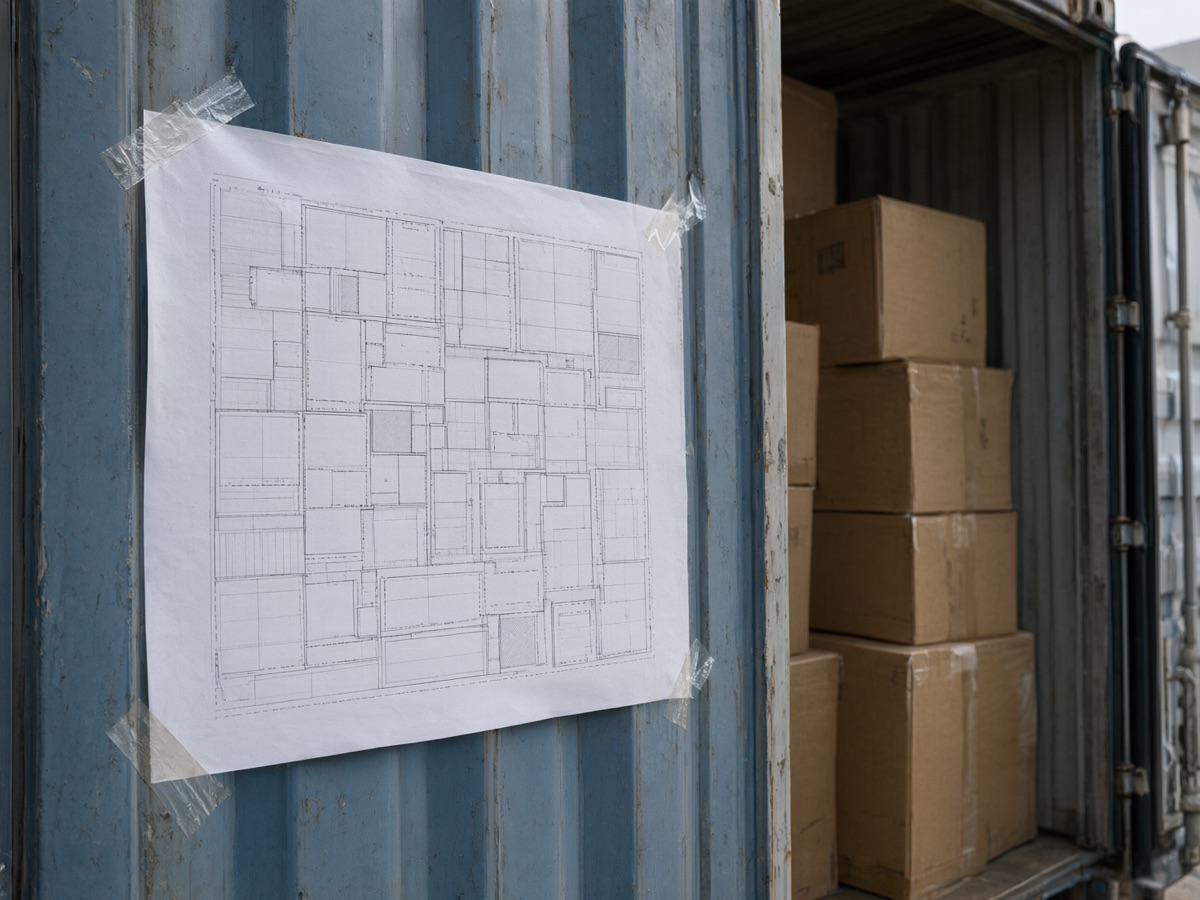
With everything measured, our load planner builds a plan for each container. For the appliance maker, it's a build-sequence plan: parts for Monday's production at the door, Friday's at the nose. For the smart home client, it's about weight balance and keeping fragile display packaging off the floor.
The plan is printed and taped inside the container door. The loaders follow it tier by tier, and photograph each tier as it's finished.
5:30 pm: sealed and gone
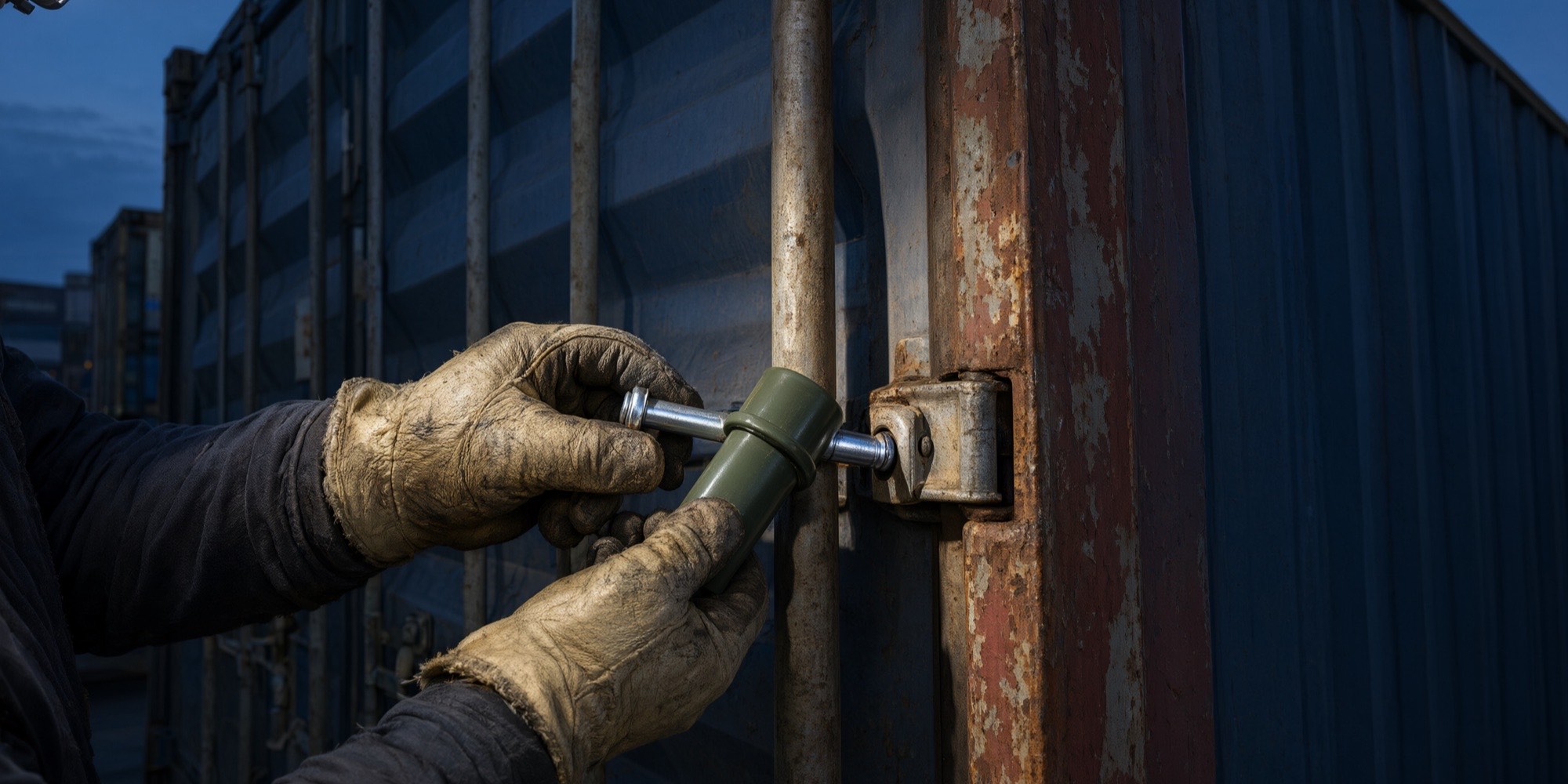
By early evening, all four containers are loaded, sealed and photographed. The seal numbers go into our system and onto the ISF our customs team in Chicago filed three days ago. The trucks leave for the terminal, and the clients get a photo of their sealed doors.
By the numbers, that day
- 9 suppliers, 14 purchase orders
- 61 pallets, 2,846 cartons received
- 1 short shipment caught (20 cartons)
- 2 damaged cartons repacked
- 4 × 40' high cube containers loaded and sealed
- 312 photos sent to clients
Then on Wednesday, it starts again.